On Creative Inspiration

s1

I have been taking time to look back through my sketchbook from last year.

s3

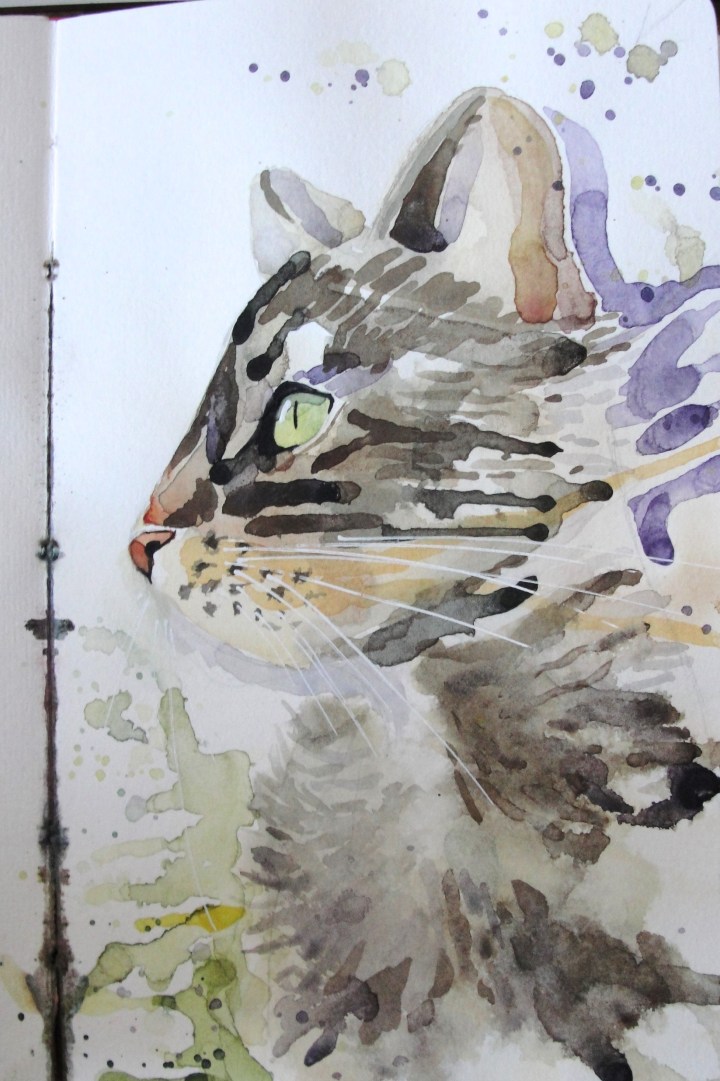
I began to play around with watercolour, painting animals in a free and relaxed way. I tried to capture the spirit of each animal, rather than a hyper-realistic image.

s2

Unfortunately, I let life get in the way and I didn’t keep up with the exploration. I have ordered a new sketchbook for myself, as my old one only has a couple of pages left, so I am hoping this will be a good creativity boost!

s4

Happy exploring!

Nature Study On Periscope With Leah Boden

12773143_10153280131665800_393838513_o

I am really excited to let you know about a wonderful opportunity to learn more about the Charlotte Mason method of nature study.

My lovely friend Leah will be doing a live periscope event tomorrow (Thursday) at 1:30pm GMT.

Leah and I go back a long way, and she truly is a wonderful, gracious lady, who has so much to offer the Home Education community.

IMG_20151020_111536

Along with husband Dave, Leah Pastors Mosaic Church in her city, and has home educated their four beautiful children with the Charlotte Mason method for the past 8 years.

Please do tune in to Leah’s talk tomorrow; it really is a chance to learn from an experienced Charlotte Mason mother, who will come along-side and encourage you as you seek to educate your children with a rich and varied education.

You do not need an account to watch the event, but you will need to register with Periscope if you wish to comment or ask questions.

If you are unable to make the live event, you can watch the event later here and I strongly urge you to have a look at the other videos Leah has; a real treasure trove for us mothers.

Leah will also be sharing a 25% discount code for Exploring Nature With Children, so tune in, and enjoy, and please do let me know what you think of the show.

Leah blogs and shares her gorgeous photography at leahboden.com


Keeping a Nature Journal


1

Nature journaling is an immensely rewarding pursuit for both parent and child. In Charlotte Mason’s own words:

Consider, too, what an unequalled mental training the child-naturalist is getting for any study or calling under the sun — the powers of attention, of discrimination, of patient pursuit, growing with his growth, what will they not fit him for?

Home Education Vol. 1, p. 61

Today I would like to share with you my top five tips to help you in keeping a nature journal.

  • Choose a journal that you will enjoy using.

There are so many different sketchbooks and journals on the market, it can be really quite confusing. The main points to consider would be:

Paper texture and weight

Choose the paper, according to the media you will be using in your journal.

Hot-pressed paper has a very smooth surface. This is actually the paper in my current journal. It is great for writing on, and using with coloured pencils, but tends to not be that great with watercolour; the paint can be quite difficult to control.

DL5

Cold-pressed paper (sometimes referred to as Not paper) has a more versatile, slightly ‘toothy’ surface which will work well with both ink, coloured pencils, and light watercolour washes.

1212121

Lastly, there is Rough paper, which has a much ‘toothier’ surface & will cope with lots of lovely, juicy paint.

DL10

Paper is a very personal preference. I often use quite wet washes in my journals, but often the paper I favour is extremely smooth, which makes no sense at all!

23


Play around with different papers to get a feel for what you and your child prefer to work on, but if you are starting out, I would suggest going for a cold-pressed paper to begin with, as you experiment with different media.

The thickness of paper is indicated by its weight, and is measured either in grams per square metre (gsm) or pounds per ream (lb).The papers that are most frequently used tend to be:

90 lb (190 gsm) Found in many sketchbooks, may buckle with a watercolour wash.
140 lb (300 gsm) Tends to be used for finished watercolour paintings, but will still buckle if  not taped down
300 lb (638 gsm) Extremely heavy-weigh paper. does not buckle


Journal size & shape

Journals are available in all shapes & sizes, from tiny, palm-sized sketchbooks, through to huge 24″x36″ affairs! Usually rectangular, in either portrait or landscape formation, they can also be found in a square format. Try to buy from an art shop if possible, rather than online, then both you and your child can hold the books in your hands to see which feels most naturally comfortable. Your preferences may change as you progress in your nature journaling journey.

Binding

Wire bound or hardbound is again a personal preference. I find the wire bindings get in my way, however wire bound books have the ability to lay the book flat with ease, or fold the covers back completely.

5

  • Let go of perfectionism!

Do not let yourself or your child be caught up in creating the ‘perfect’ nature journal page (whatever that may be!) Keep in your mind the thought that nature study is science rather than art, it may help a little! Observe closely and record what you see, not what you think you see.

Often people feel very nervous beginning a new journal. The pressure of the first blank page! Many journalers leave the first couple of pages blank, and begin with their first entry on the second, even third page. You can go back and work on that first page another time, or use it for lists, such as local wildflowers, birds, daily temperatures, or use the first page as a testing space for new paint colours, pens or coloured pencils.

3

If something goes awry in your journal, please don’t ever tear out a disappointing page from your journal. Everyone has them and tearing it out will weaken and damage your book. Instead, there are other possibilities. Learn how to correct the mistake; what went wrong, how can it be fixed? Making mistakes is the fastest way to progress in learning something new. You could simply begin a new sketch right there on the page with the old one. Or, if worst comes to the worst, stick a photograph, seed packet, or clipping from a wildlife article of the offending page. Just never tear out a page. Never give up on your journal, and it will never give up on you!

DL9

  • What to include in your nature journal

Here are some details that are helpful to include in your journal:

Basic entries:

• The location

• Date

• Time of day (or night!)

• A brief note on the weather. I usually draw a small rectangle next to the above details and make a quick sketch to represent the weather, rather than writing about it.

• Once you have sketched your subject, be sure to label it, though this may need to wait until you have looked up your subject in your field guide.

More advanced ideas:

• Latin names of subjects

• Diagrams

• Notes on sketches – you may want to include further details, such as notes on textures, or position etc.

• Measurements

• Pressed flowers or leaves

• Photographs

• Quotes

• Passages of scripture

• Poetry – use the weekly poems as a starting point.

• Photographs

• Lists – insects, wild flowers, mammals, trees, whatever appeals to you, the journal keeper.

101010

Please do not get overwhelmed at this point. The essence of nature journaling is to get out of doors, observe and then sketch something in nature, label and date the sketch. That’s it! If you do this consistently, you cannot help but to learn about the world around you and improve your own recording / sketching skills. If you would like ideas of what to study on a seasonal basis, with all the information you need for basic study, please take a look at my book Exploring Nature With Children. It has helped many, many families make nature study happen on a regular basis.

  • Work in your journal regularly 

Dare I suggest daily? The benefits of regular nature study are many;

Learning about the natural world around you

Spending just five to ten minutes a day observing nature is all you need to build your local knowledge. Can’t find time daily? Try just once a week. It is the regularity that will make the difference, noticing the changing seasons, the movement of the sun in the sky, the shape of the moon, when the apple tree blossoms, and so forth.

1

Connection the the natural world

How connected children feel to nature develops deeply-held feelings and attitudes towards wildlife and the world we all live in.

4


The formation of habit

“The habits of the child produce the character of the man.” Charlotte Mason

  • Improving skills

To reiterate what has been said above; the consistency of spending a small but regular time with your journals, out of doors will greatly improve the skills of both you and your child.  Observing nature closely, and drawing what you see (not what you think you see) is essential to building drawing skills. And vice versa; drawing will build observation skills.

 “It is only what we have truly seen that we can truly reproduce; hence, observation is enormously trained by art-teaching.” Charlotte Mason

discipline


Getting Started With Nature Drawing For Both Parent And Child.

J1

I am often asked about getting started with nature drawing for both parent and child.

J3

The best advice I can give for both parent & child is to simply draw.

Charlotte Mason knew what she was doing; observing nature closely, and drawing what you see (not what you think you see) is essential to building drawing skills. And vice versa; drawing will build observation skills.

 “It is only what we have truly seen that we can truly reproduce; hence, observation is enormously trained by art-teaching.” Charlotte Mason

1

My firm belief is that everyone can draw. Of course, some will be more talented, or pick it up quicker, but there are rules we can learn, which when followed, produce authentic results.

Would we tell someone who cannot read that they do not have talent? We would show them step by step the keys to reading. I believe it is the same with art.

I wrote a guest post a couple of years ago for the Expanding Wisdom blog, that you may find helpful, all about learning the dry brush technique, which Miss Mason favoured.

Playing with Watercolors by Lynn Seddon Title Image

I also have a tutorial on my own blog which is more my current, splashy, loose style, and takes you step by step to create your own journal entry.

T38

You may also find these other posts to be of help:

Supplies For Nature Journaling

Setting Up Your Nature Journal

Not on sketching, but has useful ideas on nature study with children:

How To Study Nature With Children Of All Ages

I would also really recommend the following books by Claire Walker Leslie:

Nature Drawing. A Tool For Learning

The Art Of Field Sketching

I would also strongly recommend studying great works of art as part of a child’s education.

“We cannot measure the influence that one or another artist has upon the child’s sense of beauty, upon his power of seeing, as in a picture, the common sights of life; he is enriched more than we know in having really looked at even a single picture”

Charlotte Mason Vol. 1, p. 309

So again, as well as surrounding the child with beauty, it is the idea of the “power of seeing”, and “only what we have truly seen” that makes a difference.

Here is an excellent article on how to get started with studying art with your child.

Exploring Nature With Children is a smashing resource for making picture study happen regularly in your own home. It has the name and details of a famous work of art that relates to the nature topic being studied each week. The works of art are easily looked up online, or found in art books available from your local library.

There is one picture for each of the forty-eight weeks of nature study; four weeks for each month of the year, organised by season.

In conclusion, to learn to sketch, you have to sketch. We can read all the books, buy all the supplies, but in the end we have to get down to the task, and learn by doing, learn by our mistakes. Which can be pretty humbling! But I think it is great for our children, to see us struggle to learn something new. It is a great reminder to us of how our children feel when they are working to master a new skill. Also be sure to surround yourself and your child with beauty, both in nature and in art.

Small steps, small steps.

Happy Exploring!


A Calendar Of Firsts: Lists

cal of firsts

How are you getting on with your Calendar of Firsts?

I have begun mine and I am finding it to be a quick, and non-threatening form of nature journaling!

Inspired by Charlotte Mason, who mentions list keeping,  I thought I would share with you some of the list-type entries I plan to keep this year.

“The study of natural history and botany with bird lists and plant lists continues throughout school life, while other branches of science are taken term by term.”

Vol 6 Home Education

Daily Temperature

I will be using the calendar section of my diary to record the daily temperature. As a fun twist, I am going to colour each date according to the temperature. You can see my colour key at the bottom of the calendar:

1

If you miss a day, here is a good site to check the temperature of your locality for the last two weeks.

Colours Of The Year

This idea comes from Clare Walker Leslie. It is in one of her books, but unfortunately I cannot remember which one. Please do post in the comments if you know. I have done this previously, and it really does help me to think about the colours in nature through the months of the year. Simple sketch out a circle and divide into twelve, each twelfth representing a month of the year. You then simply paint the current ‘month’ with the colours you see around you in the natural world. Fun!

2

Bird List

Simply a list of birds I have seen. I include the following information:

  • Common name
  • Latin Name
  • Location
  • Date

3

Flower List

As with the birds, a list of wildflowers I have seen. I include the same information as for the bird list.

4

That is all for now; I shall let you know if I decide to add further lists.

A New Year, A New Diary. Beginning A Calendar Of Firsts

M1

A happy New Year to you!

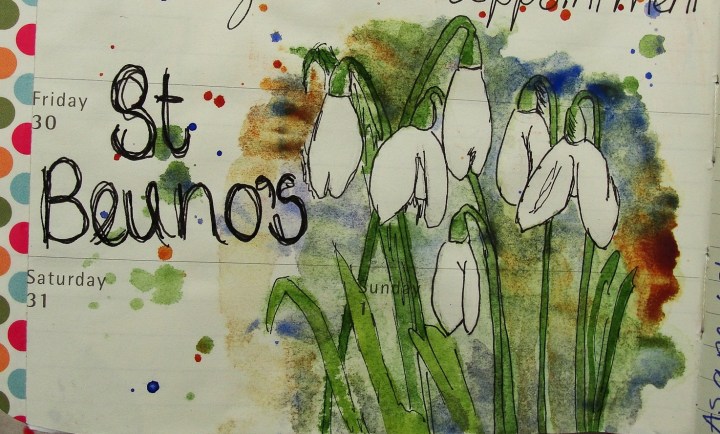
My goal this year is to keep a Charlotte Mason inspired Calendar of Firsts; to record recurring seasonal events, such as the first snowdrops, the first apple on our tree in the garden, and when our apple tree loses it’s leaves.

I am really pleased to have some of my readers planning to join me in this diary-keeping, which, scientifically speaking, is known as phenology.

Here are some past posts you may find useful:

A Calendar Of Firsts

Setting Up Your Calendar Of Firsts

My Diary Is Ready!

If you plan to add little watercolour sketches to your calendar of firsts, you may find this tutorial helpful:

Creating A Watercolour Nature Journal Page ~ A Tutorial

Sometimes, a brand-new diary or sketchbook can be dreadfully intimidating in its pristine perfection. If you are following along with Exploring Nature With Children, you may find the ideas in there to be helpful. The current focus is the twelve days of Christmas; here is a short prompt to help you along:

New Year’s Day

Take a walk to your special nature spot. Be thankful for this place and look forward to the year ahead. Remember to replenish the food for the birds there.

You could choose to observe what is happening in your special nature spot and record that, or perhaps make a list of things you are thankful for today, (both in nature and as a family). Instead you may decide to focus on observing the birds. Record them feeding, keeping warm, even looking for a mate!

The first January week in Exploring Nature With Children is all about the Winter Sky, so you will find lots of ideas there if you would like a resource to ‘hold your hand’, so to speak, as you begin your calendar-keeping.

Please let me know how you are getting on in the comments below, or on the Exploring Nature With Children FaceBook group. I am so very excited to be sharing this journey with you!


My Diary Is Ready!

M1

Do you remember my Calendar of Firsts post? I talked about keeping a Charlotte Mason-inspired diary of the firsts in nature for a whole year.

I did a follow-up post about Setting up Your Calendar of Firsts. Well, as you can see from the above picture, mine is now all ready for January!

When Rose and I got home from church on Sunday evening, we all settled down for the Strictly results show, and I worked on adding washi tape to the edges of the pages.

M2

M3

Extra-special glittery pages for Christmas week 2016

M4

Have you found a suitable diary for your calendar of firsts?

Nature journals For Young Children

Whilst have a sort-out of my knitting books, I came across my eldest daughter’s very first nature journal. (Now, now, I have never said I am the most organised of home educators!)

This was her first book from when she was four years old. Four! how time flies! My big girl turns thirteen in a few short weeks. We did not begin formal education with her ’till she was six, but we had her journal on the go so much sooner.

I thought it might be helpful for those families with younger ones to see some pages from her journal. She had a simple, stapled sketchbook, with nice, heavy paper (this will prevent the frustration of sketches showing through on the next page, or the paper being too lightweight to hold a decent mark.

I usually dated her pages for her. Sometimes she wanted to write a word or two herself.

ENJ3

Often I labelled her sketches for her.

ENJ6

I wrote her wee narrations into her book

ENJ2

Please give your child good quality pencils, both sketching & coloured. There is nothing more frustrating than pencils with no ‘payoff’ on the paper. I always used the chunky Lyra ones when my girls were little. Crayola are good too. Be aware that less is more with little ones; too many colours to choose from can be very overwhelming.

ENJ5

I gave very simple directions to my girls when they were little, and I use that same instruction today: draw what you see, not what you think you see.

We still ended up with some happy-faced insects 🙂

ENJ1

Today Elianna still sketches. She enjoys creating art & has moved on to also creating digital art which is a huge passion of hers.

Here are two watercolours that she worked on earlier this year.

9

Keeping a nature journal with your child has so many benefits. It teaches them the wonder of the natural world around them, they learn lots of technical skills with paper, paints, and pencils, but I think the biggest benefit is that they get to know the world around them. Really know it. I can photograph a flower, tree, or creature many times, but it is only when I get out my paints & pencils that I really see it, really observe it, and get to know it.

The nature journal is such a wonderful tool to develop the habit of observation in our children. The words of Charlotte Mason express the idea best:

Just keep in mind that these notebooks are designed to help cultivate within your child the joy of nature and discovery, not to become a source of irritation, frustration, or competition. If your child finds writing difficult, offer to write his comments in his notebook as he dictates them. And whatever you do, don’t grade or correct a nature notebook! “The children keep a dated record of what they see in their nature note-books, which are left to their own management and are not corrected. These note-books are a source of pride and joy, and are freely illustrated by drawings (brushwork) of twig, flower, insect, etc.”

Home education Vol. 3, p. 236

Happy exploring!

7

Setting Up Your Calendar Of Firsts

A few days ago I shared my idea with you for keeping a Calendar of Firsts.

DL1

I have been so encouraged by how many of you shared, both here and on FaceBook, that you would like to join me in keeping a Calendar of Firsts for 2016.

I promised information on setting up your own calendar of firsts, so here goes.

I used the Moleskine Large Weekly Diary (soft cover) last year & will do so again this year. Please feel free to use any diary you like; you do not need a Moleskine to join in with me. Just beware of any diaries with a glossy finish to the page. They will not take colour well.

CF 1

The paper is not great; a little thin for nice, splashy watercolour, but the layout is perfect for my needs. You can see in the photo below you have a left side with a week to view & space for each day.

This is perfect for recording the ‘firsts’ that you see in nature, and making wee sketches.

DL7

You can also see in the picture above that I also printed out tiny photographs on my printer; these made lovely additions to my sketches.

The right had side page is lined, so I added full-sized photographs to some of these pages.

DL3

To others I added a full-sized sketch

DL10

Because the Moleskine paper was so thin, I worked these full sized sketches on watercolour, or cartridge paper. This also helped with the mini sketches for the following week, as although I was working on the Moleskine paper, it had some weight to it from the paper glued in the previous week.

Here you can see my lovely 2016 Moleskine. It is a lot thinner than the book that has been well loved this year (see the top picture)

CF2

Not essential, but a nice touch, is to add washi tape to each & every page edge in your diary. This makes the pages more substantial, and the edges prettier 🙂

I have several roles of tape; here are a few. Don’t worry about this step, it is not essential.

CF3

Here you can see I have added a strip of wash tape to the first page; simply apply half the width of the tape, then fold it over, so it covers the free edge of the reverse page. (I hope this makes sense!)

CF4

Here I just need to trim the top & bottom of the tape.

CF5

You will also need a waterproof pen; I love this one. The micron pens are great too. Basic sketching supplies of your choice, be that watercolours, coloured pencils, or even pens. You might find an old post, Supplies For Nature Journaling useful.

I think that is everything! Please do let me know if I have missed anything.

I look forward to getting started with you in January. Please do share what you are up to, either here, or on the Exploring Nature With Children FaceBook group, or find me on Twitter.


Creating A Watercolour Nature Journal Page ~ A Tutorial

101010

As promised in my last post, here is a tutorial to help you to create your own watercolour nature journal entry.

A lovely reader recently asked what a nature journal is for me. My reply was that it is very easy to become discouraged when looking at journal keeping as ‘art’. If a nature journal is looked at as a means of scientific observation & a way to record that information (rather than trying to create pretty pictures) then it is a much more satisfying experience.

Also as parents, nature journals are a wonderful record of happy times with our children, to bring out often & look back upon.

Here is Rose (now ten years old) working in her journal when she was five years old.

1 2

For me personally, as well as the points above, I have learned so much about the world around me from observing nature in my journal. It forces me to slow down and enjoy this beautiful world. I think if everyone kept a nature journal, the world would be a happier and more peaceful place!

So onto the tutorial. I warn you this post has many photos 🙂

I must preface this tutorial by stating that my style will not be for everyone! I used to create my journal entries in the dry brush style that Charlotte Mason favoured. However, it took me such a long time to complete, that I found I was creating less and less pages. This caused me to create pages in my own, much looser style, using a wet on wet technique.

I hope this tutorial will give you the basics to create your own page, to which you can add your own creative stamp.

UPDATE –

I would strongly suggest just ‘playing ‘ with the watercolour first, (especially if you are doing this with children) Experiment to see how much water / pigment works well and  play at mixing colours…what happens if red and yellow play, or red and blue? What if red, yellow and blue go to a party?
You will learn much more than you expect, I promise 🙂

I really must do a blog post about colour mixing…

Now that is out of the way, let’s get started!

Materials:

  • Nature journal or piece of watercolour paper
  • Watercolour paints
  • A medium sized watercolour paint brush with a good ‘point’, or a selection of brushes (I just use one)
  • A small spritz bottle of water (not essential)
  • A glass of water for brush cleaning
  • A tissue, or old cloth for wiping your brush

You may also find this old post useful: Supplies For Nature Journaling

I begin by planning out in my head how I want my page to look. Here I have sketched out on the blackboard roughly how I expect this page to work. I like it to include important information, and also to look pleasing to the eye.

Here I have included:

  • A title
  • A small box in which to show a pictorial representation of the weather at the time of our nature study.
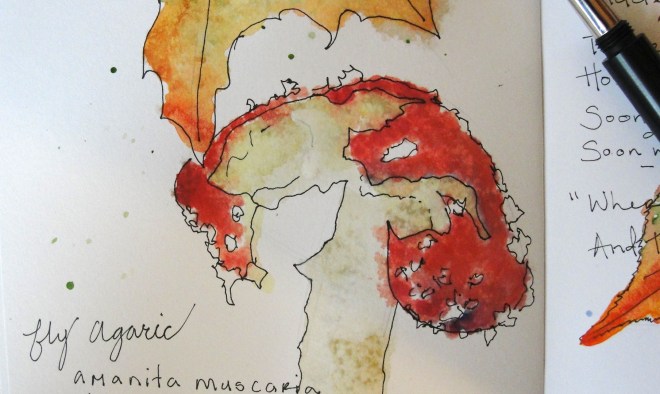
  • A sketch of the fungus
  • Name & Latin name
  • A poem I wanted to include

You will notice that I used this just as a guide, & changed the layout slightly in my finished piece.

T1

Here is a quick shot of my nature study bag, in which I keep my supplies.

T2

I started off by drawing very basic shapes for the three things I wanted to sketch (sorry for the very faint lines!) plus a box at top left for my ‘weather sketch’. You can just make out the vein pattern of a leaf (top left) basic fungus shape (bottom centre) cherry leaf (bottom right).

T3

Here you can see the leaves I am sketching

T4

I worked from this photo for the fungus:

F1

Here is a shot with my trusty carbon pen. Perfect for sketching, as it is permanent ink.

T5

I then added the title, date, weather box, & poem title in ink.

T6

I added a simple outline for my leaf. I added the serrated edges, paying attention to how the leaf edge bent, so I could see less of the little ‘teeth’. I noted the way the veins appeared (opposite one another) & did my best to represent that, looking carefully at how they shaped the leaf.

T7

Here I have marked in the main veins of the maple leaf.

T8

Next I added the outer leaf edge, looking closely at the leaf as I sketched, rather than the paper.

T9

The maple leaf is done, and is far from perfect, but it gives me an adequate visual of a wee nature treasure that I had collected, and simply sketching it caused me to closely regard the leaf in question.

T10

T11

Onto the fungus. It is a case of looking very closely and drawing what you see, not what you expect to see…

T12

I added some written information:

T13

T14

Then added the poem I wanted to include. I thought it would be interesting to add the text over an illustration.

T15

Next I sprayed my watercolour palette with water, which makes the colours lovely & ‘juicy’, and easy to use.

T16

Here are some of my watercolour brushes. I only ever use the one that is out 🙂

T17

Here are my paints, along with a wee colour chart I made that shows what the colours look like on paper. They look very different than in the tin!

T18

On to the painting!

For the cherry leaf shown, I began by splashing on some quin gold. Be sure to have your paints nice & wet.

T19

Into the wet quit gold, I dropped some winsor orange

T20

Then I took Sap green, and dropped some on around the edges. Can you see how the colours run into one another slightly?

T21

Here I am dropping Cadmium red into the still wet orange.

T22

I have taken a mix of orange & red around the edge of the leaf. See how it is nice & ‘splashy’? No painting inside the lines here 🙂

T23

I added touches of red round the edged & into the stalk, and I dropped a tiny spot of green into the stalk, too.

T24

For the Maple leaf, I took some quin gold & splashed it on. See how it pools in some areas? This will make creating light & shade easier later 🙂

T25

I dropped in some cadmium red

T26

Flicked on some sap green (I just tap the end of my paint brush – you could also use a toothbrush to spray on colour)

T27

For the fly agaric stalk, I applied a very light mix of quin gold & neutral tint

T28

here I added more where the mushroom was darker

T29

T30

I took Winsor yellow, a lovely warm yellow & just touched it into the wet quin gold/neutral tint wash.

T31

I added cadmium red

T32

some touches of ultra marine to make darker patches

T33

some permanent rose to brighten

T34

T35

A light wash of neutral tint was applied to the wether box to show mist 🙂

T36

Then, as I am want to do, I had fun flicking on splashes of happy colour. This step is optional 🙂

T37

I added a few wee touches of white gouache on the stalk of the fly agaric as a highlight.

T38

All done!

T39

T40

Please feel free to ask any questions, and do share your own journal entries. I am far from an expert, but I have found a way to create entries that works for me & I very much enjoy our nature study time.

I am looking into the possibility of running a live class online, to help you create your own watercolour journal entry, were we paint along together. Would this be of interest at all? Please let me know in the comments if this is something you think you may want to do.

Happy exploring!